Your open position, half-hour by half-hour, as the wind changes.
The wind forecast moves, and so does what you still have to sell before each gate closes.
Calseda keeps each half-hour's open position and its value current the moment the forecast or a trade
changes, recalculating only the half-hours a change touches. Your own settlement periods work the same way,
15-minute ones included.
The evening wind forecast rises three hours before gate closure.
Today
07:00
The desk sets the day's position from the morning forecast.
14:00
The forecast rises for the evening. The position sheet still shows the morning's numbers.
17:10
Someone refreshes the sheet and finds 18:00 long by more than its limit. Gate closure for 18:00 was at 17:00.
Next day
The power left unsold settles at the imbalance price.
With Calseda
14:00
The forecast arrives. Every half-hour it touches is recalculated, and 18:00 goes over its limit.
14:00
One alert goes to the desk, opening on the forecast change behind it.
14:05
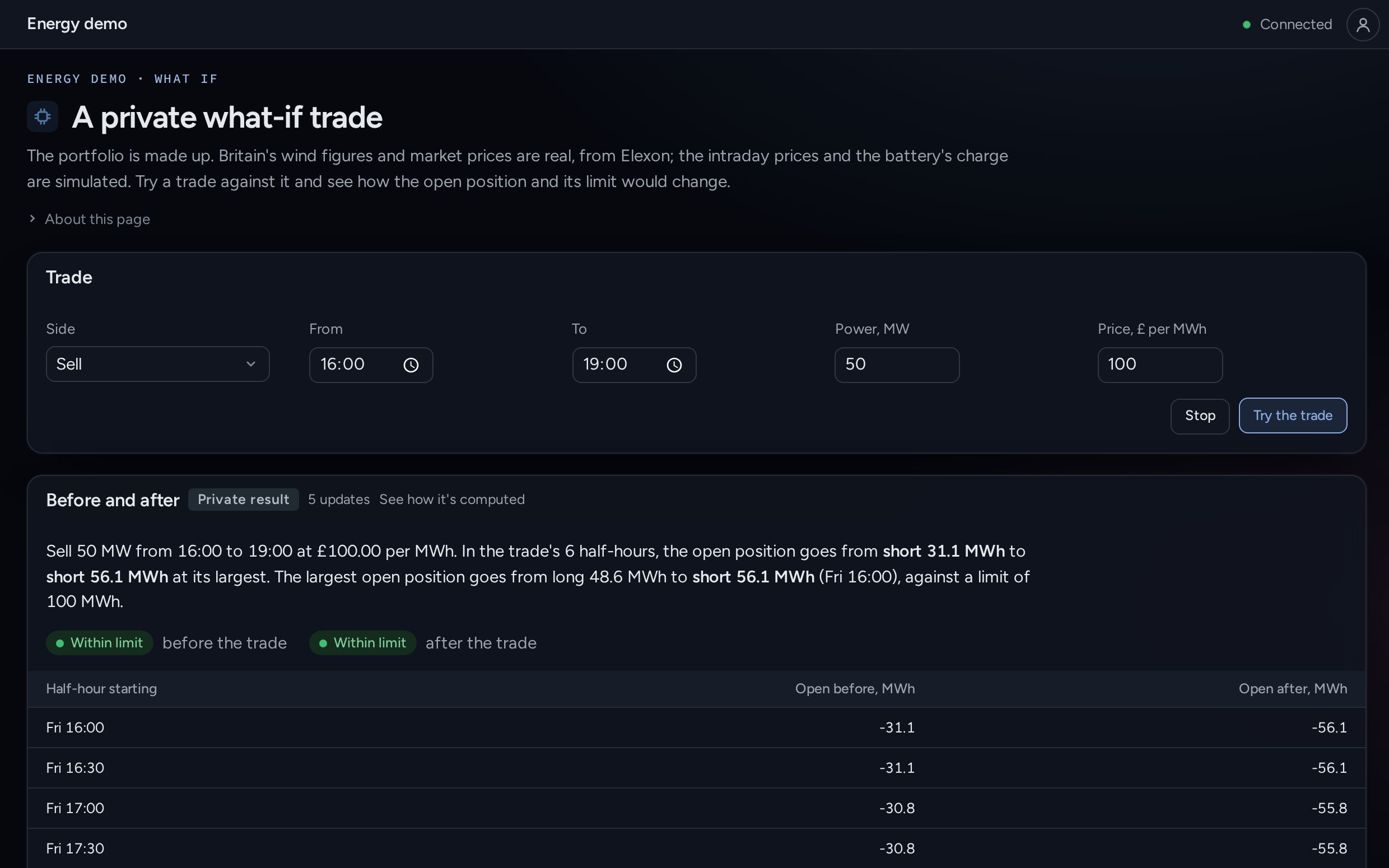
A trader tries a sale for 18:00 against the live position, and sees it back within its limit before booking.
14:06
The trade is booked, and the position updates at once.
What settles at the imbalance price should be what you chose to leave open.
EU rules make each balance responsible party “financially responsible for its
imbalances”. When a forecast moves the position, you see it while the half-hour is still open, and can trade
the difference. When the system price spikes, each half-hour shows the newest price, with no
backlog.
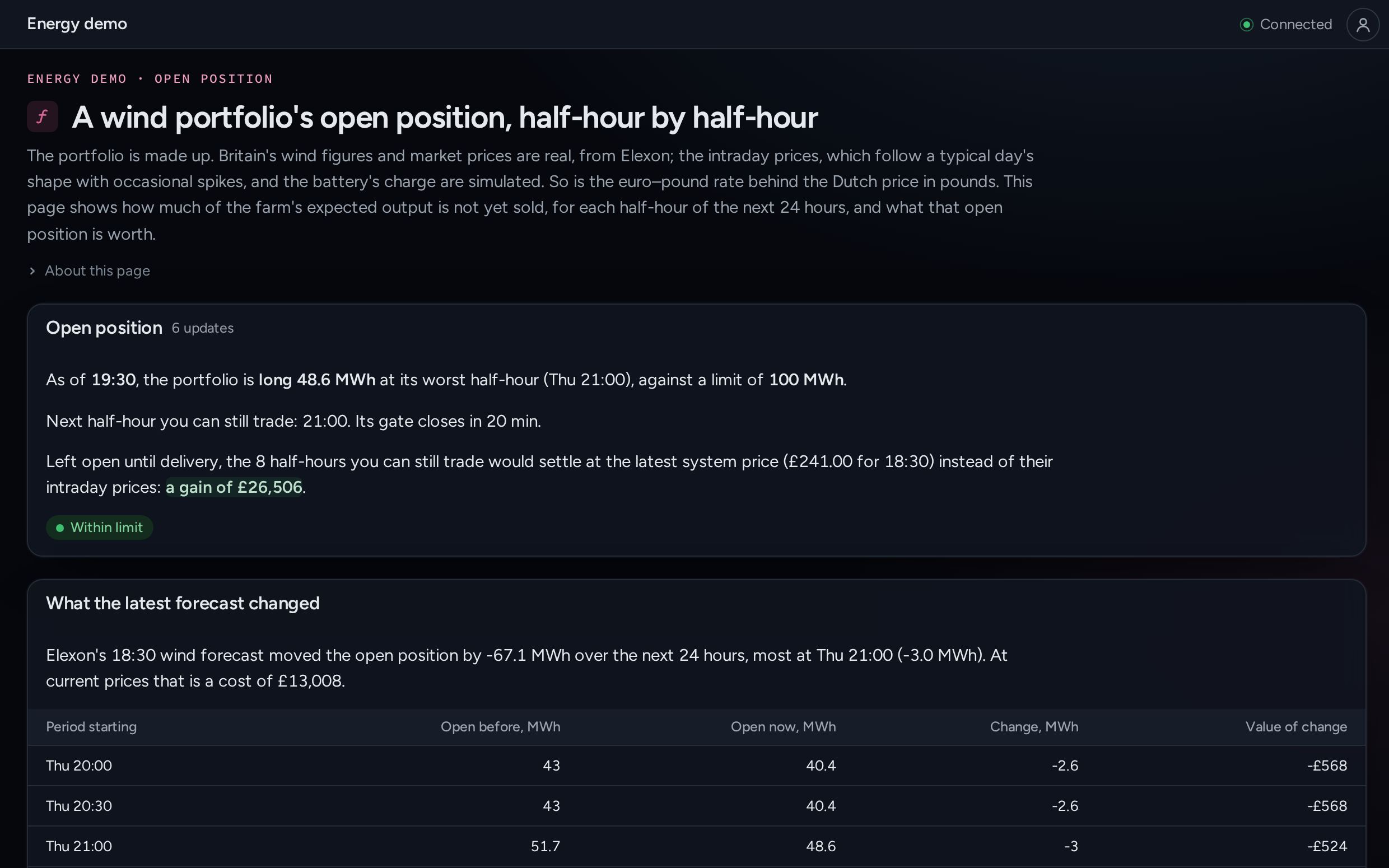
The demo recalculates a 400 MW wind farm's position for each of the next 48 half-hours.
The position comes from Britain's wind figures and market prices, and moves as they
change. Half-hours still open for trading are valued at intraday prices, the rest at the market index price. A
battery's schedule follows the same prices, and the position counts it.
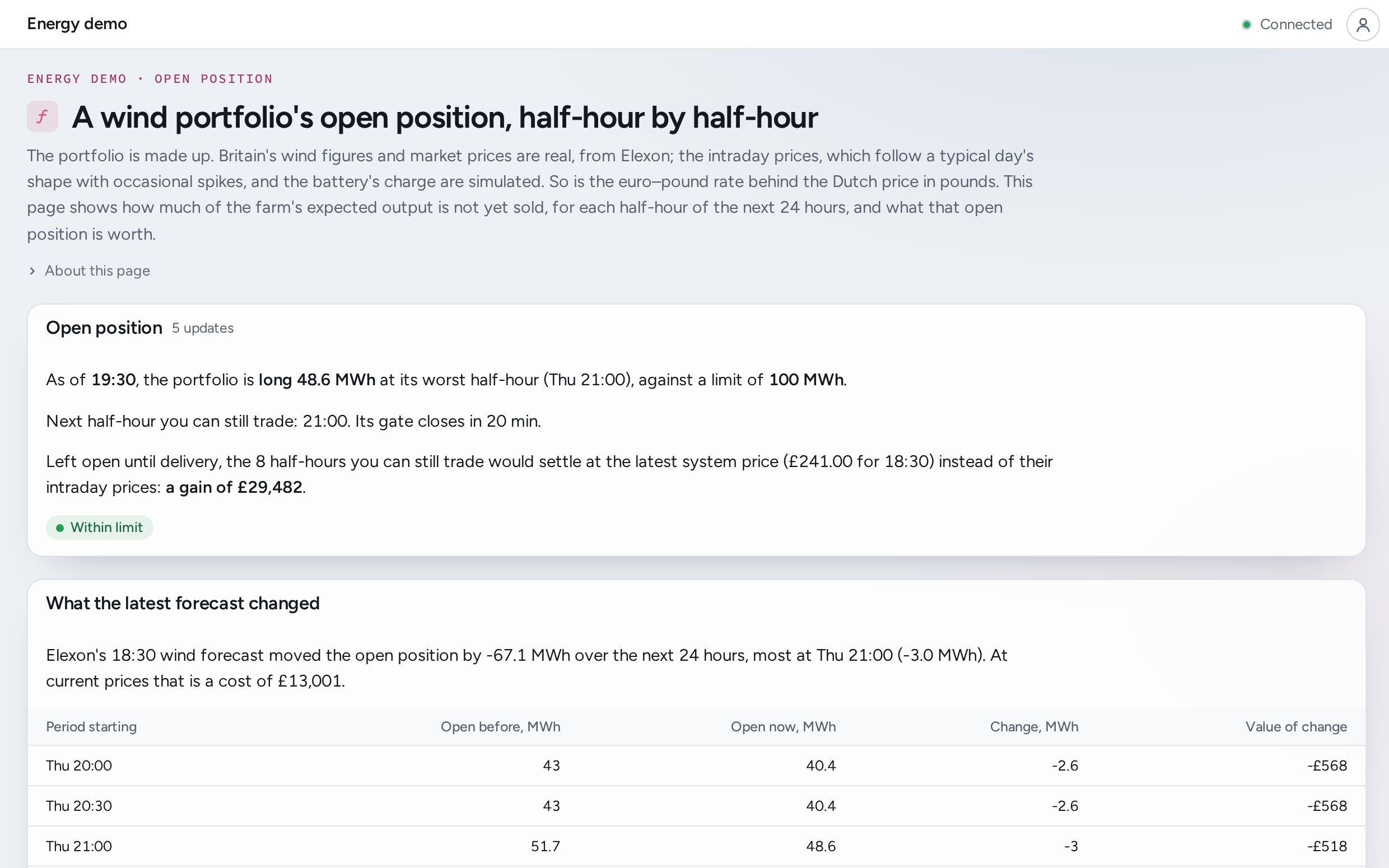
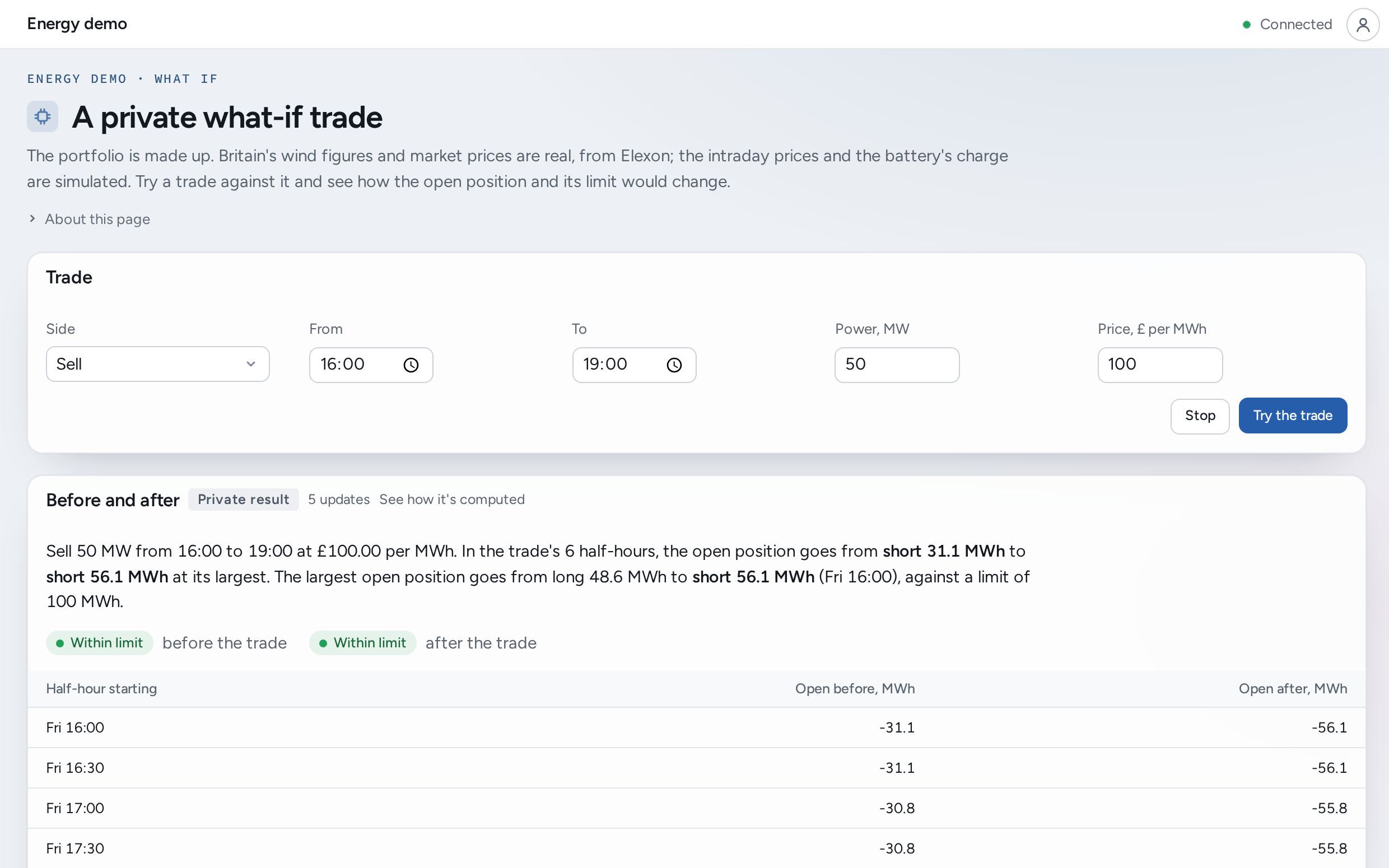
A wind portfolio's open position for each half-hour, against its limit.A trade tried against the position before it is made.
Put one wind farm on Calseda while the position sheet keeps running.
Choose the asset
One wind farm, or one battery with the trades against it.
Send trades from your trading system
Your trading system, Trayport or Endur for example, sends each
trade as it is booked, over Kafka or a REST call. Trade capture and settlement stay as they are.
Write the position calculation
Your analysts write it, or Calseda calls the engine you already run.
It runs in your own environment.
Compare with the position sheet
The sheet stays the reference until the live position matches it.
A market data source that charges per request is asked only for what a calculation uses now.
See your own book half-hour by half-hour
Become a design partner: one portfolio's position live in about six weeks, for a fixed fee.
At the end you keep the framework, licensed to run what you built on one server.