Calseda reads your existing data and calls your existing engines
It replaces none of them.
Calseda keeps the figures your business runs on current as their data changes, recalculating only what each change affects. Open any figure and see its full lineage, down to the raw data, and export it as a report. It runs in your own environment, and you keep your calculation engine.
The live demos need no sign-in.
| Figure | Use of limit | State |
|---|---|---|
| Credit exposureCounterparty A | 42% | Within |
| Credit exposureCounterparty C | 51%82%104% | WithinNearOver limit |
| Minimum balanceEUR settlement account | 61% | Within |
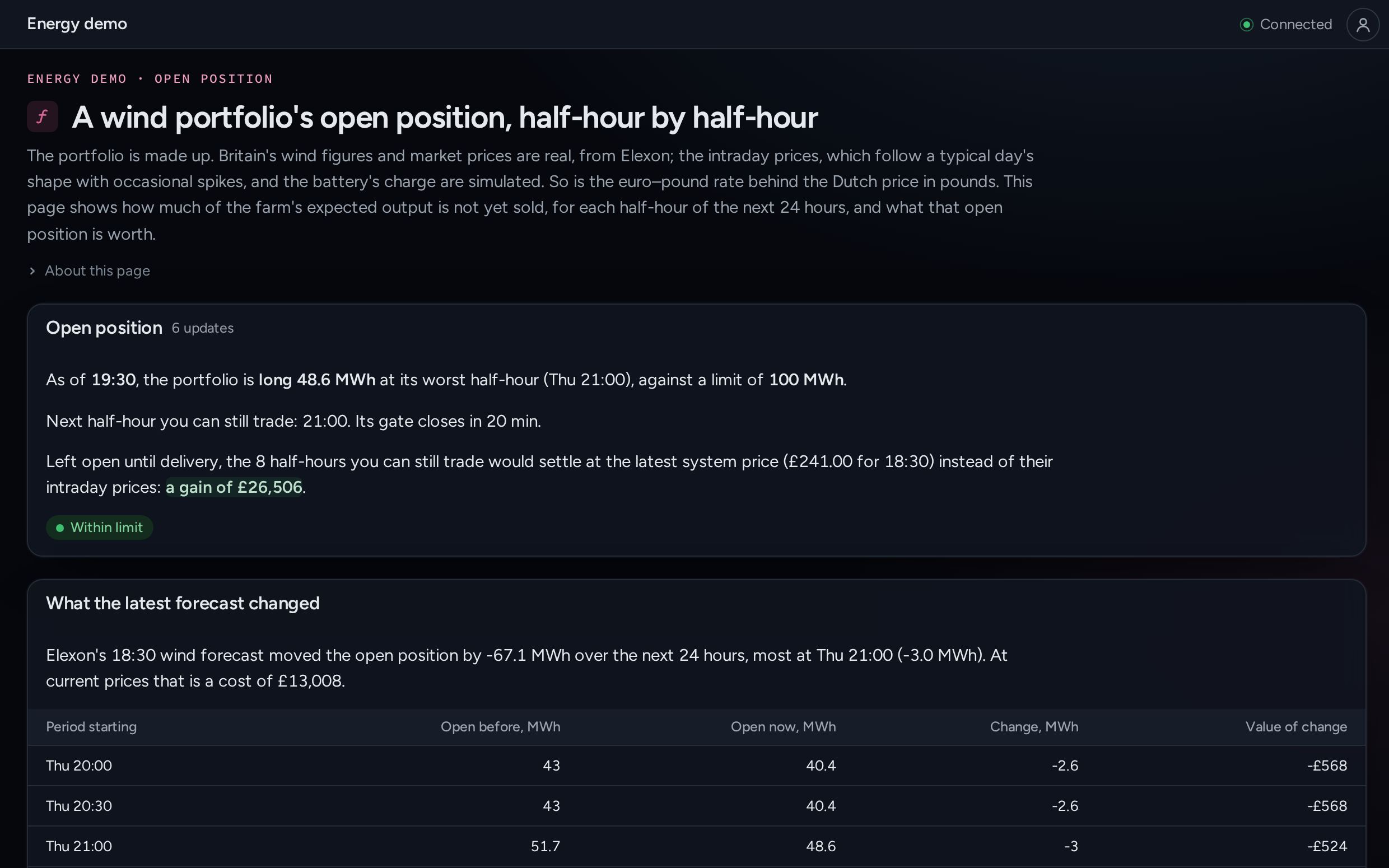
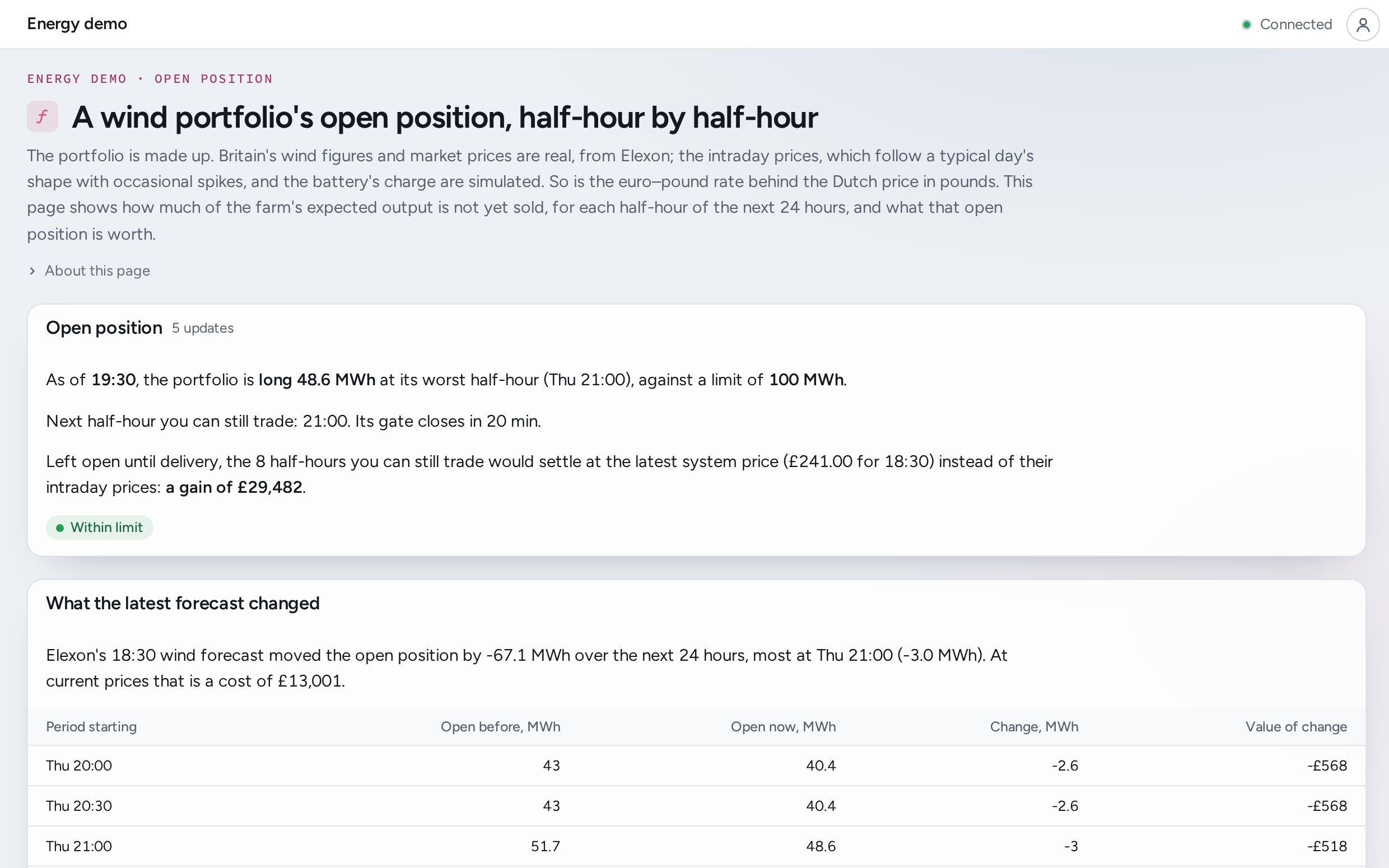
| Open position17:30 half-hour | 88% | Near |
Why Counterparty C moved
Full lineage · Counterparty C
104% of its limit at 10:14:02. Every input it used, each with its source and age, down to the raw data. Nothing stale or missing. Export as a report.
Most risk figures are recalculated overnight. We think that's backwards: your book changed at 10:14, and only the figures that change touches need recalculating, then.
A limit breached at 10:14 and found tomorrow is an excess nobody approved.
Citi built its own platform for live risk and P&L, XiNG[1], and the Options Clearing Corporation cut an overnight margin batch of more than eight hours to a five-minute intraday run[2]. You don't have to build the platform.
| Moment | Today | With Calseda |
|---|---|---|
| When figures update | Overnight, or when someone runs the report. | When their data changes, and only the figures a change affects. The cost follows how much changes, not how big your book is. |
| When a limit is crossed | Someone spots it in tomorrow's report. | The figure shows it as it happens, and an alert goes to Teams or your ticketing tool. |
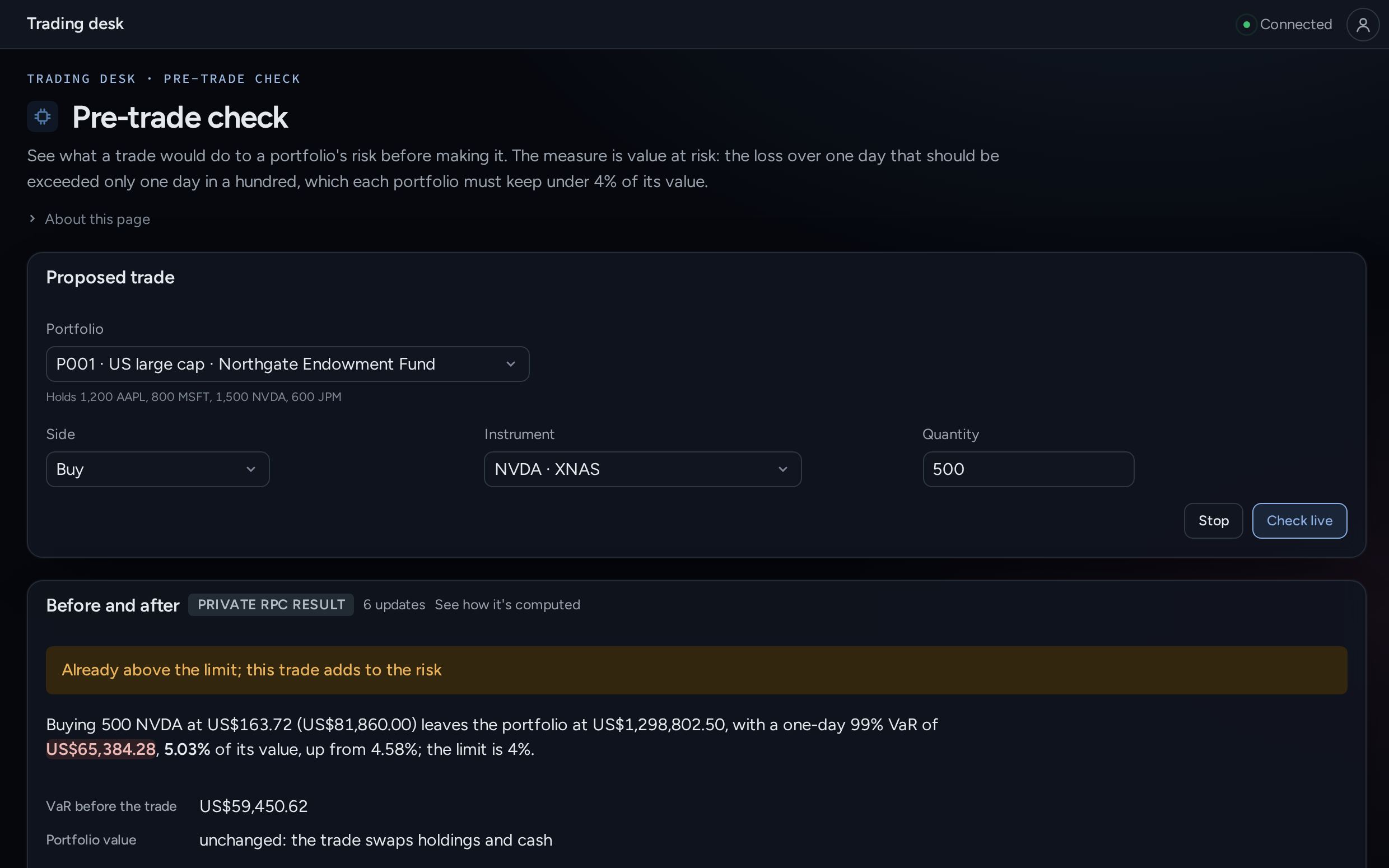
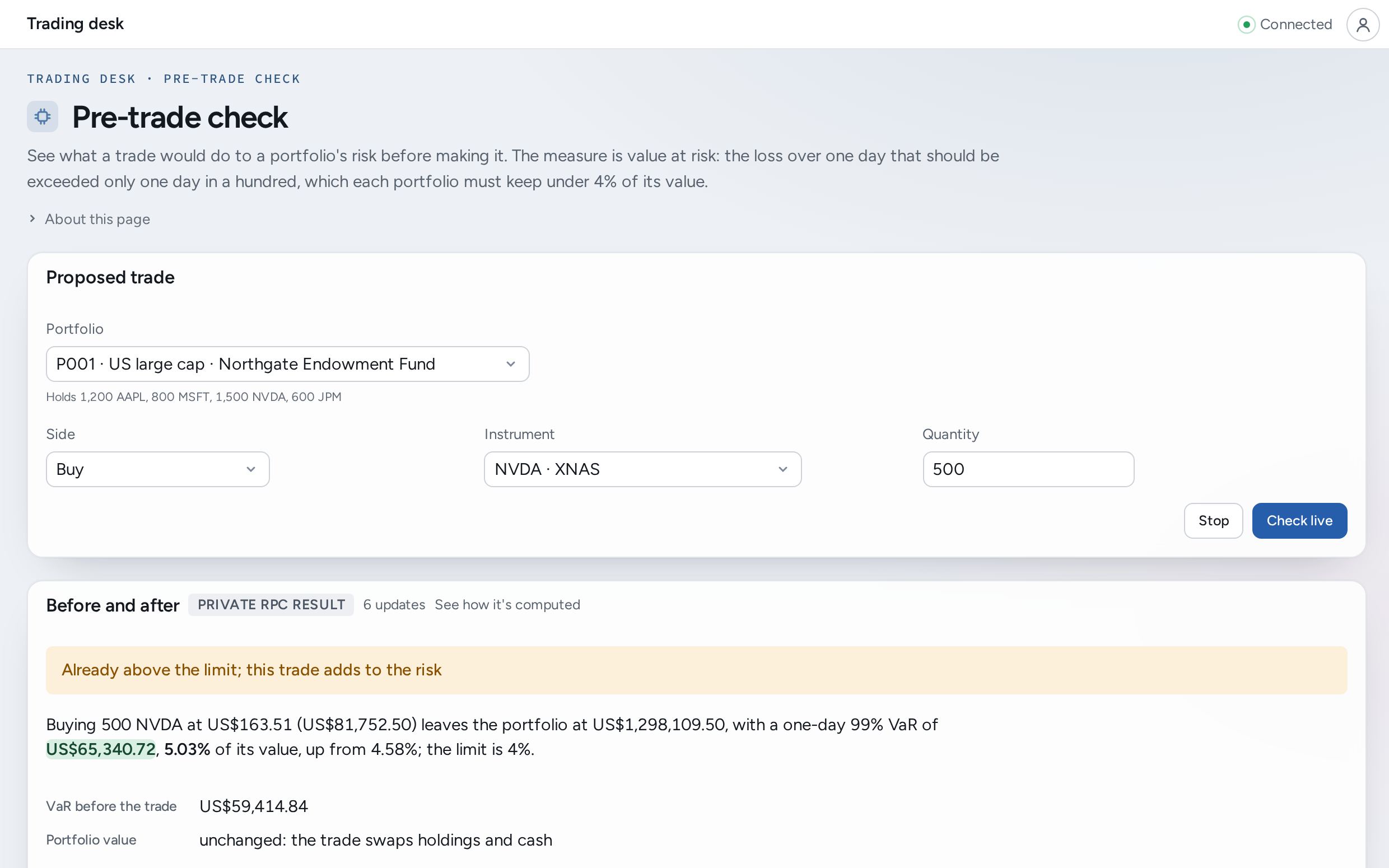
| Before you commit | Checked against last night's figure. | Your own calculation, run on the live data with your change. Only you see the answer. |
| When someone asks why | Days of rebuilding the answer from logs and spreadsheets. | Open the figure, follow its lineage down to the raw data, and export it as a report. |
Calseda calls the engine you already run, or your own people write the calculation and Calseda runs everything around it:
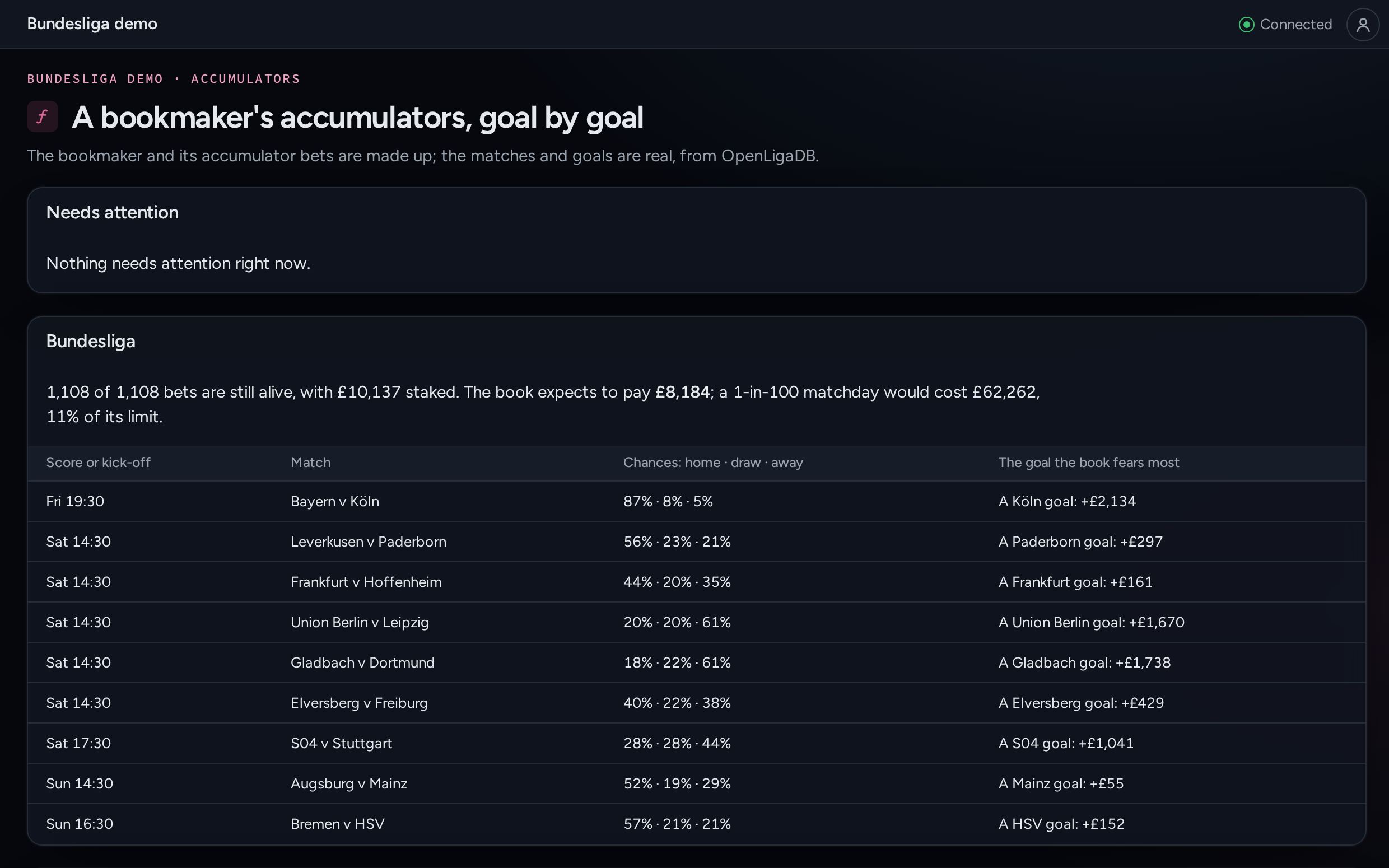
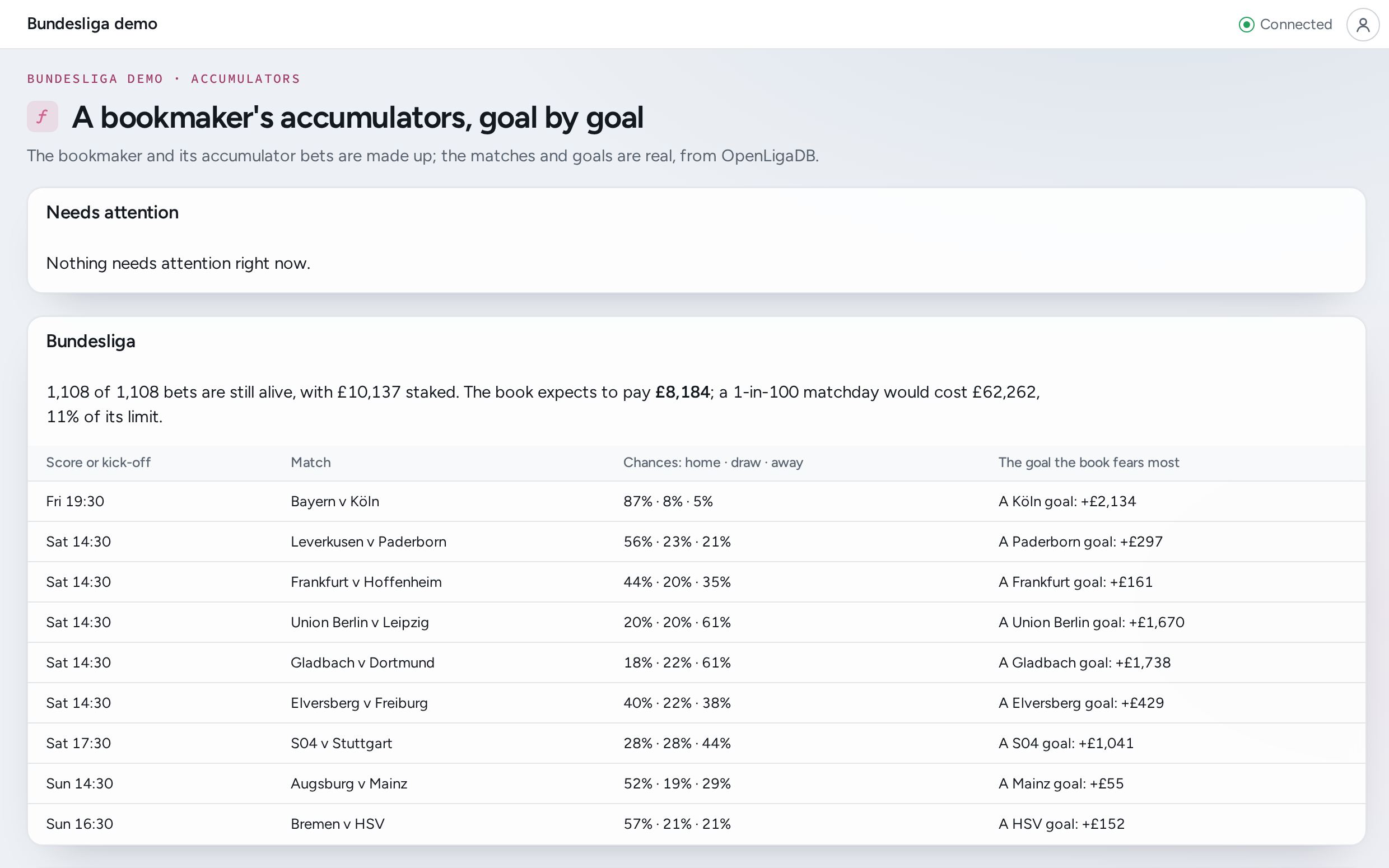
The same holds beyond banks, in energy trading and sports betting.
The demos run on the same Calseda software you would run yourself. A change reaches the figures it affects in milliseconds, and Calseda measures that time for every figure.
It replaces none of them.
No data reaches us, and nothing calls back to Calseda.
Every value entered by hand carries who entered it.
It stays under your own model and change controls.
Calseda is not a ledger. Where every single event must be processed exactly once, keep the systems built for that.
Become a design partner: one of your figures live in about six weeks, for a fixed fee. At the end you keep the framework, licensed to run what you built on one server.
To share: the executive briefing (PDF) and one-page briefings. For your technical colleagues: every figure its own live calculation.