Payments released on facts
Release or hold a large payment with the current position, and what moved it, in front of you, instead of after a phone call to operations.
Unsure of the position, treasury holds a larger buffer than it needs, and the buffer costs money to hold. Calseda updates each account's position as each payment settles, and only the accounts a payment touches.
Release or hold a large payment with the current position, and what moved it, in front of you, instead of after a phone call to operations.
The cells hold live figures. An adjustment published from a sheet is checked against your permissions and shows who made it, beside the value it replaced.
Keep each position's changes for the period you set, and your own calculation can work out BCBS 248 measures, such as daily maximum intraday liquidity usage, from them. Collateral and margin can be revalued the same way, at current prices.
Today treasury would start from the overnight position and a spreadsheet of expected flows, and phone operations to update it by hand. By the time the sheet is right, the window has moved on. Basel's Principle 8 asks a bank to “actively manage its intraday liquidity positions and risks”.
Large payments leave the EUR account. Each one updates the account's position as it settles.
A clearing house calls for margin. The EUR buffer turns amber, and treasury sees which payments and which call moved it, as on the demo's settlement accounts on the live board ↗.
Treasury tries a transfer from the USD account against the live position first. Only treasury sees the answer, and nothing moves.
The transfer is made, and both accounts update as it settles. The margin call is met.
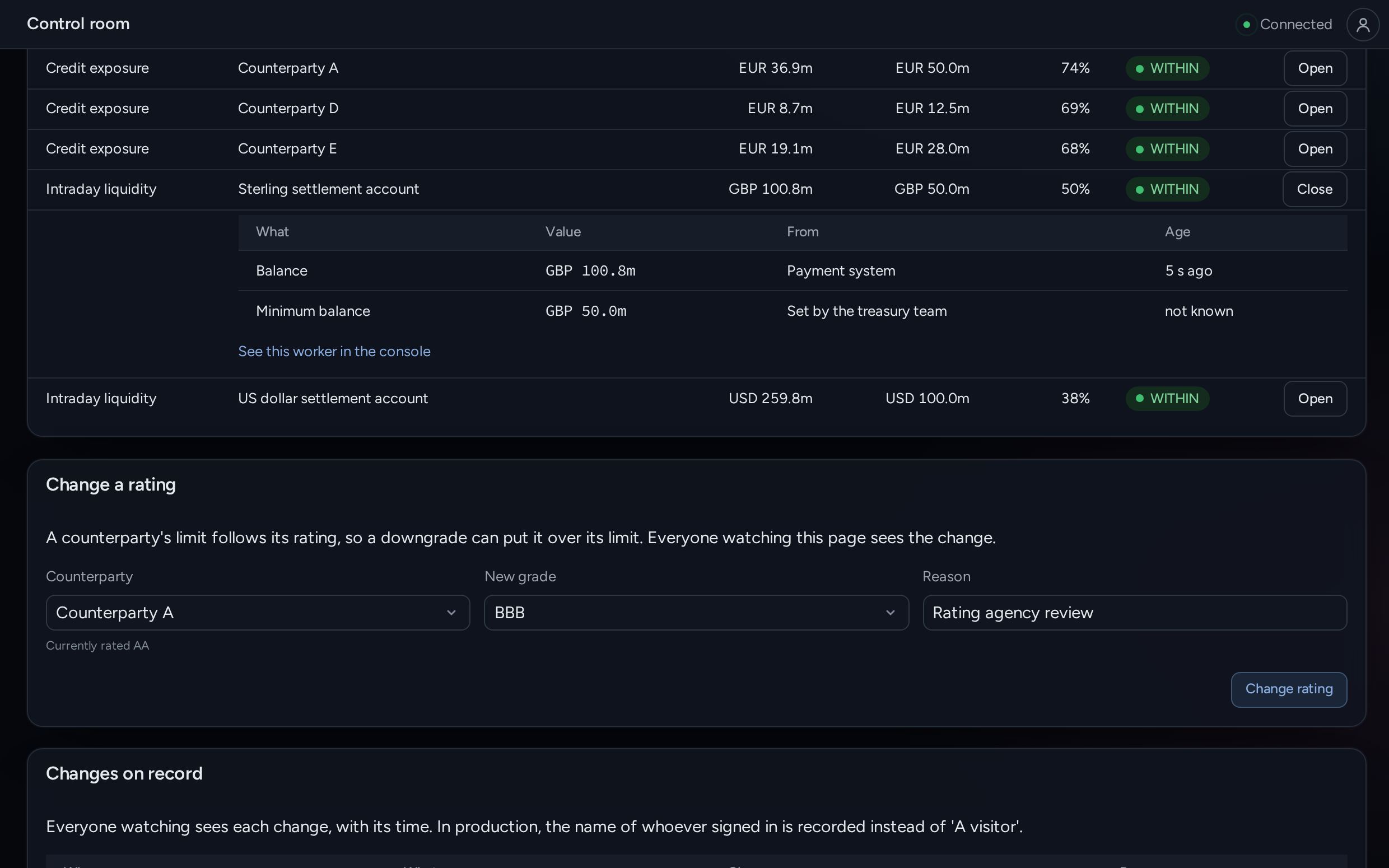
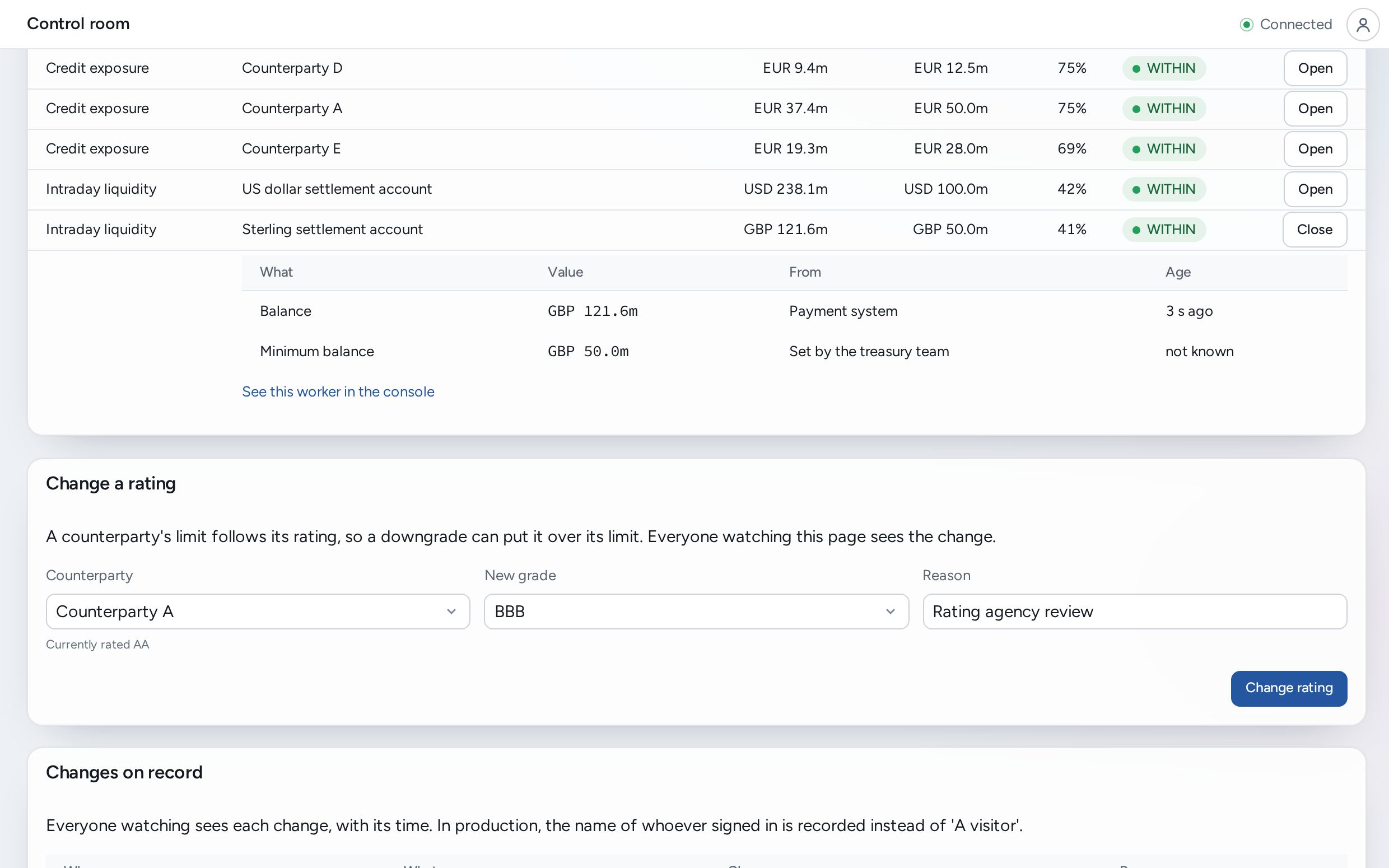
Treasury's own analysts write the position calculation, and Calseda runs everything around it, or Calseda calls the liquidity engine you already run. Nostro and settlement accounts work the same way. Payments and balances come from the systems that already produce them, in your own environment. The spreadsheet keeps running alongside until treasury relies on the live position.
Become a design partner: one currency's intraday position live in about six weeks, for a fixed fee. At the end you keep the framework, licensed to run what you built on one server.
The same story for treasury, on one page: Liquidity and collateral (PDF).